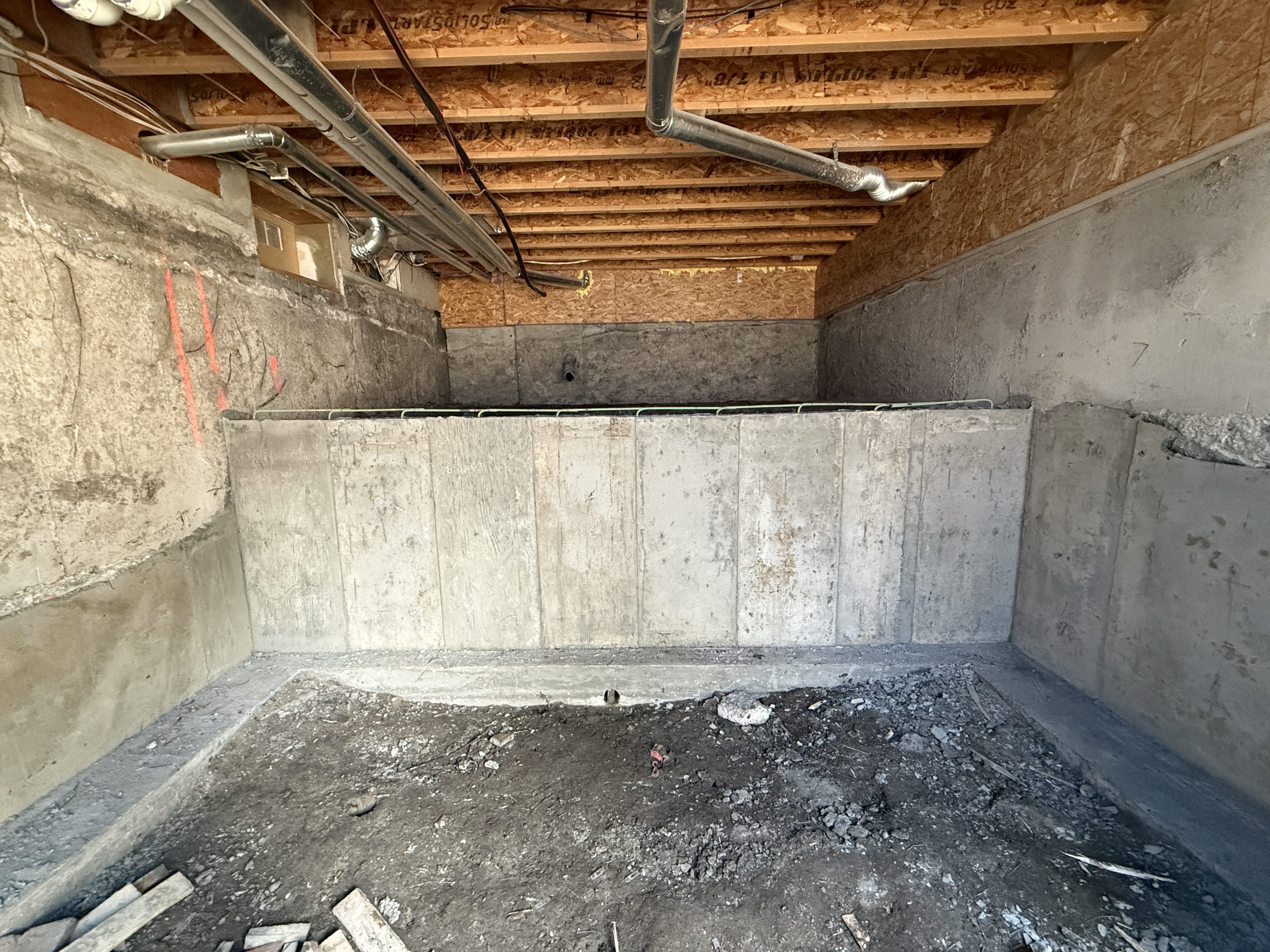
A loading dock can look like a fairly simple section of concrete until you consider what happens there every day. Trucks reverse into position. Pallets cross the surface. Forklifts follow the same paths repeatedly. Snow melts, water collects, and temperatures drop again. Heavy loads concentrate around edges, joints and transition points.
That makes loading areas different from concrete that mainly handles foot traffic or parked vehicles.
When commercial loading areas fail early, the cause is rarely just “bad concrete.” More often, several weaknesses are working together. The base moves slightly. Water reaches a vulnerable joint. Heavy wheels repeatedly strike the same edge. The slab was not built for the loads it eventually carried. Traffic starts before the concrete has developed enough strength.
By the time cracking, settlement or spalling becomes obvious, the conditions behind it may have been developing for years.
A Loading Dock Takes More Abuse Than It Looks Like
Loading areas are working surfaces.
A concrete loading dock has to deal with more than the weight of a parked truck. Vehicles brake, turn and reverse. Forklifts and other material-handling equipment repeatedly cross the same sections. Loads are transferred through relatively small tire contact areas. Dock edges, corners and transitions can take repeated impacts.
Then Calgary adds another variable: winter.
Moisture can enter vulnerable areas, freeze, thaw and freeze again. Snow clearing and de-icing practices add another layer of exposure.
CSA A23.1, Concrete materials and methods of concrete construction, addresses environmental exposure when concrete mixtures and construction requirements are selected. But from a property owner’s perspective, the important point is simpler: a loading area needs to be built for its actual operating conditions.
A slab designed around light traffic should not be expected to perform like one planned for years of trucks and material-handling equipment.
1. Early Failure Often Starts Below the Slab
One of the most important parts of a loading area is also the part nobody sees once the job is finished.
The base.
Concrete performs best when it has stable, uniform support. If the subgrade is poorly prepared or the granular base is inadequately compacted, sections of the slab can settle or lose support.
Heavy traffic then makes the problem worse.
Think about a truck route that crosses the same section several times every day. If the material beneath one part of that route settles while the surrounding base remains stable, the slab is no longer being supported evenly. Repeated loading can turn that difference into cracking, movement or settlement at the surface.
Good site preparation means looking at:
- existing soil and subgrade conditions
- excavation requirements
- granular base material
- proper compaction
- drainage
- anticipated vehicle traffic
- transitions to surrounding pavement
- expected loading
This is also why comparing commercial concrete bids only by price can be risky. Preparation takes labour, equipment and material, and much of that investment disappears beneath the finished slab.
Cutting it from the scope makes the quote smaller. It does not make the trucks lighter.
We discuss that problem further in Why Some Concrete Contractors Underquote Projects and What It Really Costs You.
2. Water Can Turn a Small Defect Into a Recurring Repair
On a Calgary loading area, drainage is part of durability.
Water that consistently collects around a joint, depression, dock edge or transition has more opportunities to work its way into vulnerable concrete. When temperatures fall, repeated freeze-thaw exposure can accelerate deterioration.
That means a puddle is not always just a puddle.
If water repeatedly sits in the same place after rain or snowmelt, it can indicate that the grade, drainage or surrounding transitions are not moving water effectively.
The goal is not simply to install drains. The surface itself has to direct water where it is supposed to go.
Grades, drains, slab transitions, and surrounding pavement need to work as a system.
CSA A23.1 addresses exposure conditions such as freezing and thawing when concrete requirements are selected for the conditions the slab will face. For Calgary properties, those conditions should be considered from the beginning rather than treated as a maintenance problem after the slab is built.
Our guide to protecting concrete through Calgary winters focuses on residential concrete, but the same principle carries into commercial work: controlling moisture and winter exposure helps protect concrete over the long term.
3. Joints Often Take the Hit First
Concrete naturally changes volume as it cures and responds to temperature changes. Properly planned joints help manage where movement occurs.
Loading areas make joint planning more demanding because those same joints can sit directly in high-traffic paths.
A forklift crossing a joint once is not the issue. Repeating that movement hundreds or thousands of times is different.
If an exposed joint edge begins to chip, each subsequent wheel crossing can strike the damaged edge again. A relatively small defect can gradually become a rough transition, leading to additional deterioration and a poorer operating surface.
Corners, dock pits, transitions and heavily travelled routes deserve particular attention during planning.
The important distinction for property managers is that repairing the damaged edge does not necessarily correct the condition that caused it. If traffic keeps striking the same vulnerable detail, the repair may eventually face the same problem.
4. The Slab Has to Match the Loads It Will Carry
Calling a slab “commercial concrete” does not tell you enough about what it needs to do.
A delivery area serving occasional light vehicles has a very different job from a loading area handling transport trucks, forklifts and concentrated loads throughout the week.
Those operating conditions affect decisions around slab design, concrete mixture, reinforcement, thickness, joints and support.
Reinforcement is especially easy to oversimplify. Adding steel does not compensate for poor base preparation, bad drainage or concrete that is not suited to the exposure. These parts of the system have different jobs.
The better starting point is to determine how the loading area will actually be used.
What vehicles will access it? Where will they travel and turn? Where will loads be concentrated? What material-handling equipment will cross the slab? How will water leave the area? What winter conditions will it face?
Those answers give the project team much better information than simply asking for a generic commercial slab.
Reinforcement also needs to match the purpose of the slab. Rebar, welded wire reinforcement or other systems can help control cracking and support the slab’s intended performance, but reinforcement cannot compensate for poor subgrade preparation, standing water or improper curing. A durable loading area depends on all of those elements working together.
5. Concrete Needs Time Before the Loading Starts
Commercial properties have schedules.
Deliveries still need to arrive. Tenants need access. Trucks need somewhere to go. That can create pressure to reopen a newly placed loading area as quickly as possible.
Concrete does not work according to the property’s delivery schedule.
It gains strength over time, and curing conditions matter. A surface that appears hard enough to walk on is not automatically prepared for heavy commercial loading.
Putting substantial traffic onto concrete too early can work against the performance the project was designed to achieve.
That is why access and sequencing should be discussed before placement. If a business cannot close its entire loading operation for an extended period, the contractor may need to plan the work in stages or maintain another access route while the concrete develops sufficient strength.
Our article How Long Does Concrete Take to Cure? explains why curing should not be confused with simply waiting for the surface to dry.
The practical rule is simple: plan operational downtime before the pour, not while the concrete is curing.
6. The Lowest Concrete Price May Not Be the Lowest Project Cost
Commercial concrete pricing needs context.
The cost of the concrete itself is only one part of a loading-area project. Excavation, base preparation, reinforcement, forming, drainage, access, placement conditions, finishing and project sequencing can all affect the final scope.
Our breakdown of concrete costs in Calgary gives useful material-cost context, but two contractors quoting the same number of cubic metres may still be proposing very different projects.
For a loading area, the more useful comparison is scope against scope.
What preparation is included? How is drainage being addressed? What loading conditions is the slab being built around? What reinforcement and joint details are included? How will curing and site access be handled?
A loading dock is expected to work for years. Saving money by removing the parts that support that performance can be an expensive trade later.
Warning Signs Worth Investigating Early
Property managers do not need to diagnose concrete failure themselves, but recurring patterns deserve attention.
Watch for:
- water collecting in the same locations
- chipped or spalling joint edges
- cracks that continue to widen
- uneven or settled slab sections
- deterioration around dock transitions
- repeated damage along forklift or truck routes
- repairs that fail again in the same location
The last point is especially important.
If a section has been patched more than once and the damage keeps returning, another patch may only reset the clock. It is worth investigating what is happening underneath, around or repeatedly across that section before paying to repair the same symptom again.
Build for the Traffic That Will Be There Five Years From Now
A good loading area rarely gets much attention once it is finished.
That is exactly the point.
Trucks arrive. Forklifts move. Snow melts. Water drains. Winter passes. The concrete continues doing its job without interfering with the operation around it.
Getting there starts before the concrete truck arrives.
The base needs to support the slab. The concrete needs to suit Calgary’s exposure conditions. Water needs somewhere to go. Joints need to make sense for the layout and traffic. Reinforcement and slab design need to reflect the loads involved. The concrete needs enough curing time before heavy use begins.
Most importantly, the loading area should be planned around how the property will actually operate, not just how the site looks on pour day.
TNA Concrete has been working in Calgary since 1993, providing concrete and related property services for residential and commercial projects. You can explore our concrete and property services to learn more about the work we handle.
If you are planning a new loading area or dealing with commercial concrete that keeps deteriorating in the same places, contact TNA Concrete. We can look at how the area is being used, what conditions the concrete is facing and what needs to be considered before the next repair or installation.