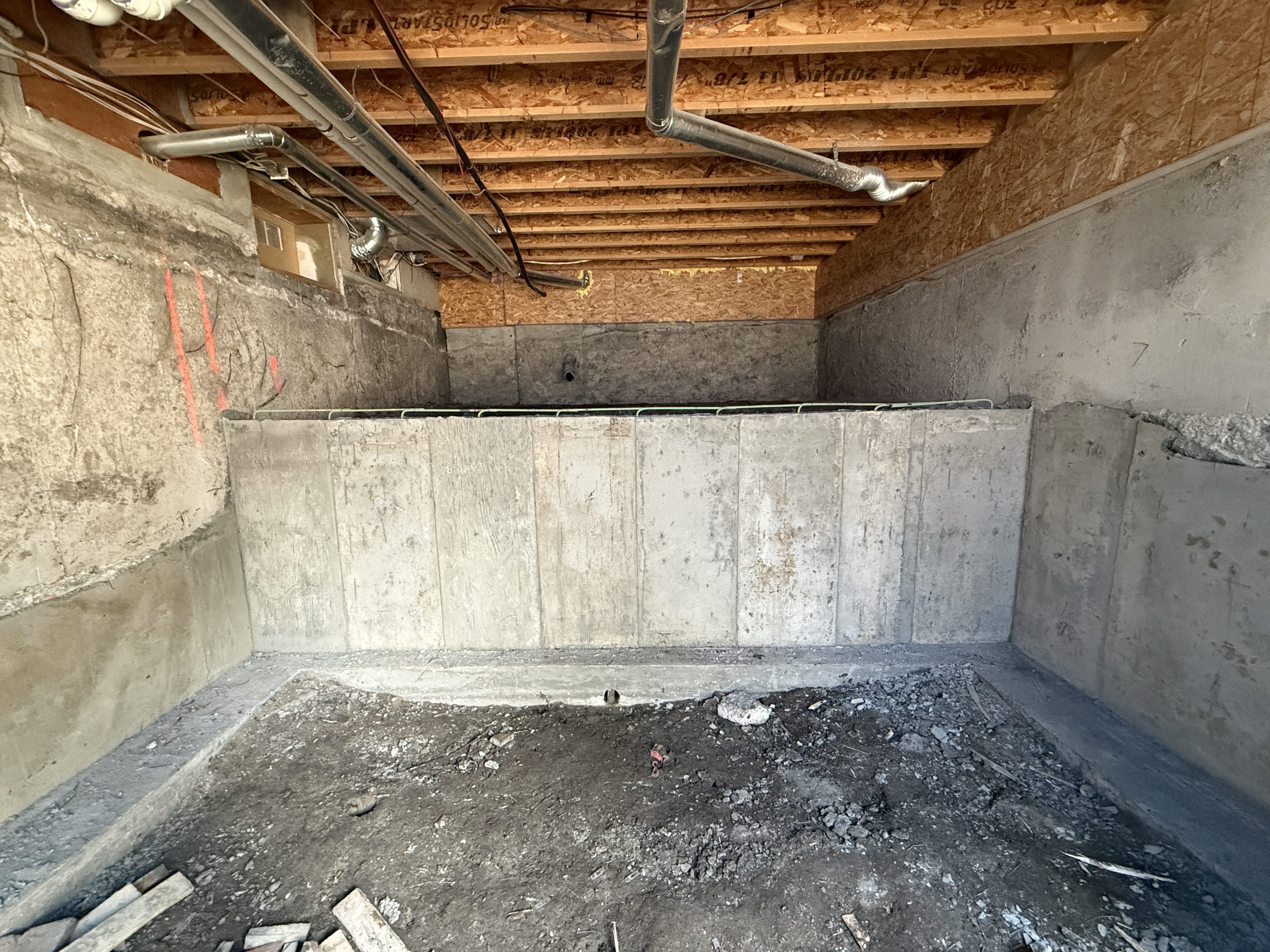
When your concrete starts cracking, crumbling, or shifting, it’s hard to know what’s fixable and what needs to go.
Spring thaw hits Calgary hard. Driveways heave, garage pads shift, and those “just cosmetic” cracks from last fall suddenly look deeper. The question most homeowners face around this time of year: Can I get away with a repair, or is this going to need a full replacement?
If you’re seeing signs of damage and aren’t sure which direction to take, this guide breaks it down with real examples, cost comparisons, and clear signs to watch for—especially in Calgary’s freeze-thaw-heavy climate.
Looking for a quick overview of pros and cons? We’ve covered that here in our original blog.
What’s Actually Wrong With Your Concrete?
Before jumping to a fix, let’s look at what the damage is really telling you. Not all cracks or flaws are equal.
Surface-level issues like:
- Hairline cracks
- Light scaling or surface flaking
- Small pitted spots from salt or water
- Oil stains from vehicles (here’s how to remove them)
These may only require a basic concrete repair or even concrete resurfacing.
Deeper damage like:
- Cracks wider than ¼ inch
- Sections that have sunk or shifted
- Water that pools or slopes toward your house
- Chunks breaking off (spalling)
- Movement at control joints
These could point to sub-base failure, frost heaving, or other structural issues—where replacement may be the smarter long-term call.
When Repair Makes Sense
Repairing is often the right move when the concrete is still structurally sound but has surface issues, cosmetic damage, or minor cracking. It’s faster, more cost-effective, and less disruptive than a full tear-out.
Good candidates for repair:
- Slabs under 20 years old
- Cracks are narrow and not growing
- Surface wear is cosmetic
- You’re prepping for resale and need a short-term fix
- Budget is a key factor right now
In some cases, concrete resurfacing is an option. This involves overlaying a new surface coat on top of existing concrete. It’s not suitable for every situation, but for driveways or patios with mostly cosmetic issues, it can extend the lifespan of your slab without the cost of replacement.
Pro tip: Summer is the best time for repair work—less rain, better curing, and stable ground make for better results.
When It’s Time to Replace
Sometimes, patching a problem only delays the inevitable—and makes it more expensive later.
You’re likely better off replacing if:
- There’s heaving or major shifting
- You’ve already repaired the same area more than once
- Cracks are wide and deep, and continue to expand
- Sections are no longer level, posing trip hazards
- The slab has drainage problems (water flows toward foundation or garage)
- Your concrete is 25+ years old and showing multiple forms of failure
Even if the damage seems “manageable,” if the base underneath is unstable, no surface patch is going to last.
Why Calgary’s Climate Changes the Equation
In Calgary, freeze-thaw cycles are the wildcard. Water seeps into cracks, freezes, expands, and forces concrete apart from the inside. By the time spring rolls around, what started as a surface crack can now run several inches deep—and new ones may appear if the slab wasn’t poured with the right mix or base prep.
If your slab has no air entrainment, a weak PSI rating, or was poured without proper grading—it may have never stood a real chance. At TNA, we’ve seen it all: garage pads poured on soft fill, driveways with zero drainage, and patio slabs that became slip hazards after just one season.
For more details on how winter impacts concrete here, check out: How To Look After Concrete During Winters In Calgary
Concrete Repair vs. Resurfacing vs. Replacement: Cost Snapshot
Here’s a general idea of what homeowners in Calgary can expect in terms of pricing:
- Crack Filling: Typically ranges from $5 to $9 per square foot.
Ideal for isolated cracks on driveways or walkways. It’s affordable and quick—but often a temporary fix if underlying issues are present. - Concrete Resurfacing: Usually falls between $7 and $15 per square foot.
Best for surface-level cosmetic problems when the concrete base is still solid. It gives the slab a fresh look, but won’t solve structural or drainage problems—or add strength to the slab. - Full Replacement: Can cost $14 to $25+ per square foot, depending on access, site conditions, and the type of finish you choose.
This is the go-to option for older concrete with deep cracks, heaving, or shifting. It takes longer and costs more upfront, but avoids recurring issues down the road.
Note: These are rough estimates. Actual costs can vary based on soil conditions, grading requirements, demolition needs, and finishing options.
What Happens If You Wait?
It’s tempting to wait “one more year,” especially if damage doesn’t look urgent. But Calgary’s weather doesn’t wait (and small issues grow fast):
- Water damage gets worse, not better
- Trip hazards can create liability risks
- Repairs become less effective
- Curb appeal suffers, especially before resale
- More invasive work later (including excavation or grading)
In short, small problems rarely stay small. To read more about choosing the right concrete company in Calgary, here’s a full guide on what to look for.
Ask These Questions Before You Decide
Before committing to a repair or replacement, get clear answers to these:
- What caused the damage in the first place?
- How long is the slab expected to last if I repair it?
- What’s the condition of the base underneath?
- Will repair costs add up over time?
- Can this be safely resurfaced or is it just a Band-Aid?
Getting real answers now helps avoid surprises later.
The Most Common Mistakes We See (And How to Avoid Them)
We’ve seen a lot of concrete repairs—and even more do-overs that could’ve been avoided with the right call early on. Here are the most common issues we come across:
- Patching major cracks without addressing the root cause
A temporary fix on a failing base usually won’t last a year in Calgary conditions. - Skipping resurfacing when it could have saved thousands
Resurfacing can work beautifully—if the base is solid and the damage is truly surface-level. - Waiting until damage gets worse before getting a second opinion
By the time a crack becomes a trip hazard, the cost often goes beyond just the concrete. - Hiring based on price alone
Cheapest rarely means best. It often means rework within 12–18 months—and we’ve replaced a lot of “cheap jobs” that didn’t survive even one winter.
If you’re unsure what you’re looking at, don’t guess. An informed call today can save time, money, and frustration down the road.
Not Sure What Your Concrete Needs? Start with the Right Team
Your concrete doesn’t just need attention—it needs the right call at the right time. Whether you’re dealing with a cracked driveway, a sinking pad, or uneven surfaces that just don’t look right anymore, the smartest thing you can do is get a clear, experienced assessment before jumping into repairs or tearing it all out.
We don’t upsell. We don’t guess. And we don’t push solutions that don’t hold up in Calgary’s climate. We’ll give you real answers, a solid plan, and one less thing to worry about.
Request your no-pressure concrete consult here and get the clarity your project deserves.